
Vibration and terrain: where steel has a weakness
Technique working in the field is exposed to constant vibrations, shocks and impacts. The fuel tank is usually firmly connected to the machine frame, so it is subjected to the same dynamic loads as the rest of the structure.
A potential weak point in steel tanks is created during production. Most of them are welded. Each weld represents a point where material fatigue can begin to manifest itself under long-term stress. In combination with engine vibrations and driving or generally moving on uneven terrain, microcracks or leaks can appear over time.
Another problem is corrosion. This does not only occur on the surface of the tank exposed to moisture and dirt, but often also inside. Temperature changes cause water condensation in the fuel, which gradually attacks the metal material. The released rust particles can then clog filters or damage sensitive parts of the fuel system.
Monolithic construction without welds
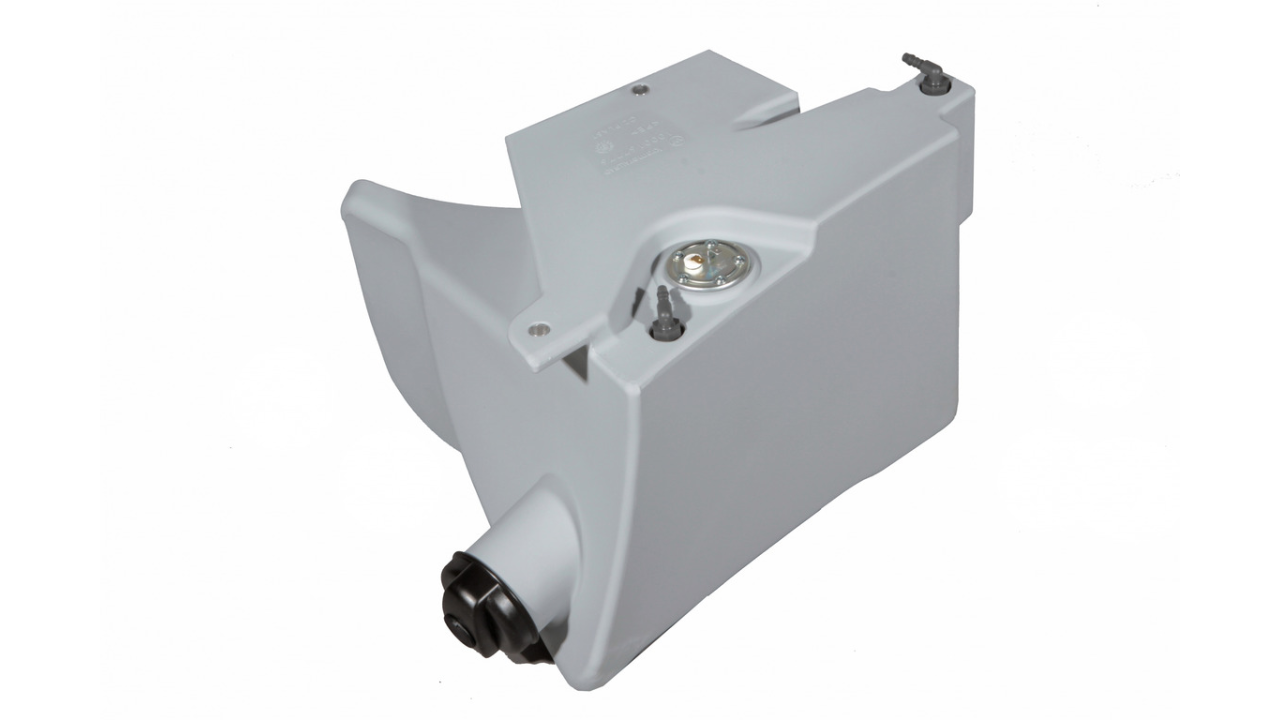
In contrast, plastic fuel tanks manufactured using the rotational molding method are created as one solid piece without joints and welds. The result is a monolithic construction that does not have the typical weak points known from metal tanks.
In addition, the polymers used have natural elasticity, so they can absorb some of the vibrations instead of transferring them to the tank structure. Thanks to this, plastic tanks are able to withstand the dynamic loads that are common for various types of technology in the long term.
Another advantage is complete resistance to corrosion. The material does not react with moisture or with the chemical components of fuels, so no deposits are formed that could contaminate the fuel system.
What are the main advantages of a plastic fuel tank in practice?
In addition to mechanical resistance, rotational molding technology also offers designers a number of practical advantages that simplify the integration of the tank into the machine:
- Formal freedom: The tank can exactly copy the shape of the frame or other components. This allows maximum use of the available space even in the most complex parts of the structure.
- Impact resistance: Plastic is naturally flexible and can absorb contact with stones in the terrain. With painted steel, any mechanical damage to the surface means the potential start of corrosion.
- Material adapted to operation: Depending on the requirements of a specific application, various types of polymers can be selected - from standard PE to cross-linked polyethylene (X-PE) to polypropylene or polyamide. This ensures 100% chemical stability to fuel and additives.
- Accessory integration: Elements such as fuel gauges, filter screens, air vents or filler necks can be integrated into the tank during production, ensuring perfect tightness of the entire system.
Tank designed according to the machine
In modern machines, the plastic fuel tank is increasingly part of the design from the beginning of development. Plastic technologies make it possible to adapt its shape, volume and location to the specific requirements of the machine so that it does not take up a single extra millimeter in the assembly.
At CZPLAST, we approach the development of tanks as an individual project for each customer. Our tanks are tailor-made to meet specific requirements – from compact liter containers to complex fuel systems for heavy industrial equipment. Thanks to our own design background, we are able to reflect the specifics of the operation in which the machine will operate into custom production, whether it is extreme vibrations in forestry or demands for chemical stability in agriculture.
Do you have a technical specification for a plastic fuel tank or are you solving a problem of how to use the space in the machine structure more efficiently? We will be happy to discuss the design and production options directly for your project with you. Do not hesitate to contact us – together we will find a solution that will be safe, durable and fit your machine exactly.