
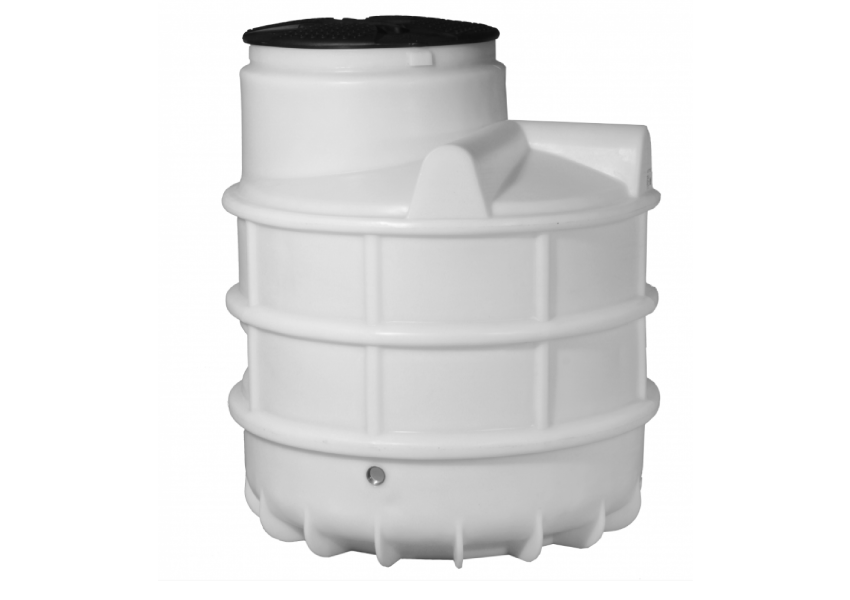
You can't do without a water meter shaft when building a house, because it protects the water meter and all fittings from frost, moisture and pressure from the surrounding soil. You may have wondered why you actually have to have it in the garden, and not comfortably warm inside. The reason is purely practical: accessibility for the network administrator. Water utilities need to have access to the meter at any time for readings or service, without having to enter your privacy or wait for you to return from work. The correctly chosen location of the water meter shaft will save you complications when approving the connection. At the same time, it will ensure trouble-free operation for decades.
In practice, it is also worth checking the specific requirements of the local water utility operator before starting excavation work - differences in details are often the reason for returning documentation.
Where to go with it? Rules for the correct location
The location for the manhole should be chosen with regard to the future use of the garden, but also with respect for the rules of the network operator:
- Just beyond the property line – The manhole is placed on your property, as close as possible to the public space (usually 1-2 meters from the fence). This minimizes the length of the connection that you as the owner have to take care of.
- Free access – There must always be an easy way to the manhole. Forget about places where you plan to have a high rock garden or a dense hedge that would completely swallow the manhole over time.
- Pay attention to future plans – Think carefully about where you will place the manhole so that a pergola, terrace or other permanent structure does not grow above it in the future. Once the manhole is in the ground, access to the manhole must remain permanently free.
Technical requirements for a water meter shaft
In order for the connection to be approved by the network operator (e.g. ČEVAK, PVK, VaK), the shaft must meet several key parameters:
- Freezing depth – The depth of the water meter shaft must be such that the water meter assembly is placed deep enough (usually 1.2 to 1.5 m) and is not damaged even by severe frost.
- Waterproofness and stability – The technical requirements for a water meter shaft emphasize that the shaft is impermeable to groundwater. At CZ PLAST, we therefore manufacture shafts as fully welded and self-supporting – thanks to this, they can withstand soil pressure without the need for complex and expensive concreting.
- Safe cover – This depends on what you will be walking on. A walkable cover for a water meter shaft in the lawn is sufficient, but if the shaft ends in a driveway, a variant with an adequate load-bearing capacity for cars is necessary.
Why choose a plastic shaft from CZ PLAST?
Plastic shafts are now completely replacing the previously used concrete. The main reason is their easy handling and extreme durability. They are light, so you don't need a crane or heavy equipment for installation - you can comfortably install them with two people. Modern plastics do not corrode, have a practically unlimited lifespan and, in addition, act as a better thermal insulator than cold concrete.
Assurance of trouble-free approval
A high-quality water meter shaft for a family house is an investment that will affect the functioning of your house for decades. If you choose the right location and certified material, you will be sure that your water supply connection will go through the approval process smoothly and will serve without failures. View the complete range of options at CZ PLAST and choose the solution that exactly matches your project.